
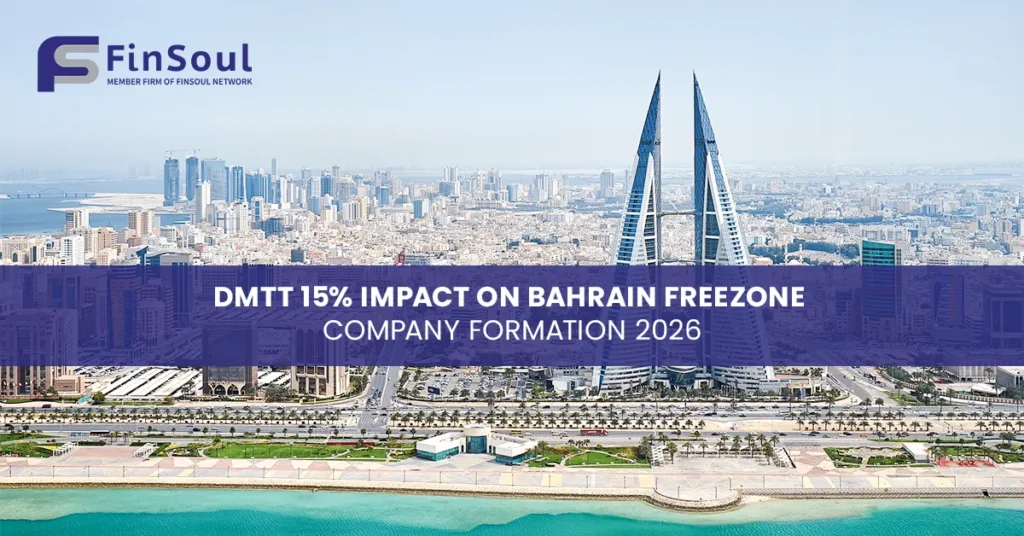
Bahrain has long positioned itself as a competitive and investor-friendly jurisdiction in the GCC. With strong infrastructure, strategic access to Saudi Arabia, and progressive regulatory reforms, it has remained an attractive hub for regional expansion. However, 2026 marks a significant shift with the introduction of the 15% Domestic Minimum Top-Up Tax (DMTT).
For investors evaluating Bahrain Freezone Company Formation, understanding how this global tax reform affects structuring, compliance, and profitability is now essential. Let’s break down what this means and how businesses can strategically adapt.
Understanding the 15% DMTT and Why It Matters for Bahrain Freezone Company Formation in 2026
The 15% Domestic Minimum Top-Up Tax is part of the OECD’s global minimum tax framework designed to ensure that large multinational enterprises (MNEs) pay a minimum effective tax rate of 15% in each jurisdiction where they operate. Bahrain’s adoption of this rule aligns the Kingdom with international tax standards.
Historically, Bahrain did not impose corporate income tax on most sectors (except oil and gas). This tax-efficient model made free zones particularly appealing. With the implementation of DMTT Bahrain, large multinational groups meeting the revenue threshold may now face a top-up tax to reach the 15% minimum rate.
For entrepreneurs and corporate groups planning Freezone Company Formation, this reform introduces a new dimension of tax planning. While not every business will be affected, qualifying multinational groups must assess whether their Bahrain entity falls within scope.
The key takeaway: 2026 is not the end of Bahrain’s attractiveness but it is the beginning of a more structured tax environment.
How the 15% DMTT Is Reshaping Bahrain Freezone Company Structures
Free zone entities have traditionally benefited from favorable regulations, 100% foreign ownership, and tax efficiency. With the 15% minimum tax framework, corporate structuring strategies are evolving.
Multinational groups operating through holding companies, regional headquarters, or intellectual property structures must now analyze substance, profit allocation, and effective tax rate calculations. Businesses can no longer rely solely on low-tax advantages; instead, economic substance and operational value creation are becoming central considerations.
This shift encourages:
- More transparent corporate reporting
- Stronger operational substance within Bahrain
- Reassessment of cross-border profit allocation
- Strategic restructuring of group entities
While smaller standalone businesses may remain unaffected, larger international groups must evaluate how their structure aligns with the DMTT requirements.
Which Bahrain Freezone Companies Will Be Affected by the 15% DMTT in 2026?
Not all businesses will automatically fall under the new tax regime. The 15% minimum tax primarily targets multinational enterprise groups exceeding the global revenue threshold set under OECD guidelines. Generally, affected entities include:
- Large multinational groups with consolidated annual revenues exceeding the prescribed threshold
- Companies forming part of international corporate structures
- Groups generating cross-border profits through subsidiaries
Small and medium enterprises operating solely within Bahrain or below the global revenue threshold are unlikely to face direct DMTT obligations.
However, it remains crucial for any investor considering company formation in Bahrain to assess group-level exposure. Even if the Bahrain entity itself generates modest income, its connection to a global corporate group may bring it within scope.
New Company Formation vs Existing Freezone Entities: What Changes Under DMTT?
The introduction of DMTT impacts both new and existing entities, but the considerations differ.
For new investors:
Business owners planning entry into Bahrain must now factor minimum tax exposure into feasibility studies, financial projections, and structuring decisions. Tax modelling should be completed before incorporation.
For existing free zone companies:
Established businesses must conduct a compliance review to determine whether their effective tax rate falls below 15% and whether top-up tax applies. Corporate restructuring, transfer pricing adjustments, or operational expansion may be necessary.
The distinction lies in preparedness. New entities can build compliant structures from day one, whereas existing companies may need to adjust previously optimized tax arrangements.
Compliance and Reporting Requirements Under Bahrain’s 15% DMTT
With tax reform comes reporting responsibility. Multinational groups falling within scope will need to:
- Calculate effective tax rates on a jurisdictional basis
- File relevant disclosures and documentation
- Maintain detailed financial and accounting records
- Align internal reporting systems with global minimum tax rules
Compliance is not limited to paying additional tax. Documentation, transparency, and audit readiness become equally important. Professional advisory support is highly recommended to ensure compliance with evolving regulatory guidelines. Failure to meet reporting standards could lead to penalties or reputational risks.
How the 15% DMTT Influences Foreign Investor Decisions in Bahrain Freezones
Foreign investors are naturally evaluating whether Bahrain remains competitive in light of the new tax regime. The answer depends on perspective. While the era of “zero tax appeal” may be shifting for large multinationals, Bahrain continues to offer:
- Strategic access to the GCC market
- Competitive operational costs
- 100% foreign ownership
- Flexible regulatory frameworks
- Strong financial services infrastructure
For many international groups, the decision is no longer about tax alone. Market access, logistics, and business efficiency play a growing role.
In fact, the introduction of DMTT may increase investor confidence by aligning the country with international compliance standards, reducing reputational risk, and strengthening regulatory transparency.
How the 15% Tax Impacts the Cost of Freezone Company Formation
One of the most pressing concerns is cost. Does the 15% minimum tax significantly increase overall investment expenses? The answer varies depending on business size and structure.
For smaller companies below the revenue threshold, the direct tax impact may be negligible. Setup fees, licensing costs, office requirements, and operational expenses remain largely unchanged. For multinational groups within scope, financial modelling must now include potential top-up tax liabilities. This affects:
- Net profit projections
- Return on investment calculations
- Dividend distribution strategies
- Group tax optimization models
Despite this, Bahrain remains competitive compared to jurisdictions with higher corporate tax rates. When evaluating business setup in Bahrain, investors should assess total ecosystem advantages rather than focusing solely on tax percentages.
Strategic Planning Tips Before Registering a Bahrain Freezone Company in 2026
Planning is now more critical than ever. Before proceeding with Freezone Company Formation, investors should:
- Conduct a global revenue threshold analysis
- Assess group-level tax exposure
- Review transfer pricing arrangements
- Evaluate operational substance requirements
- Seek professional tax and corporate advisory guidance
Proactive structuring can significantly reduce compliance risks and ensure smooth operations. Businesses should also consider long-term growth projections. Even if current revenues fall below thresholds, rapid expansion could bring the entity into scope in future years.
Is Bahrain Freezone Still Profitable After the Introduction of the 15% DMTT?
Profitability depends on multiple variables beyond tax.
Bahrain offers:
- Lower operational costs compared to many GCC counterparts
- Access to a skilled workforce
- Strong banking and fintech ecosystem
- Strategic geographic positioning
For large multinational groups, the minimum tax simply aligns Bahrain with global standards rather than making it high-tax. A 15% rate remains competitive compared to global averages.
For SMEs and regional businesses, Bahrain continues to provide a cost-effective and flexible environment. In short, the country’s value proposition is evolving, not disappearing. Smart structuring and proper advisory support ensure that profitability remains strong.
Final Thoughts: Navigating Freezone Company Formation Under DMTT in 2026
The introduction of the 15% Domestic Minimum Top-Up Tax marks a transformative moment for **Bahrain’s corporate landscape. While it introduces new compliance and planning considerations, it does not eliminate the Kingdom’s strategic advantages.
For investors exploring Bahrain Freezone Company Formation, the key lies in preparation. Understanding whether your group falls within scope, restructuring where necessary, and maintaining compliance will ensure a smooth transition into the new regulatory era. Working with experienced advisory firms such as Finsoul Bahrain can help businesses navigate these regulatory changes, assess their tax exposure, and implement effective structuring strategies aligned with the new framework.
Tax reform should not be viewed as a barrier but as a structural evolution aligned with global transparency standards. Bahrain continues to offer strategic benefits that extend beyond tax incentives, including a business-friendly environment, strong financial infrastructure, and access to regional markets. With expert guidance from firms like Finsoul Bahrain and forward-thinking planning, 2026 can still be a year of opportunity for businesses entering or expanding within Bahrain’s free zones.