
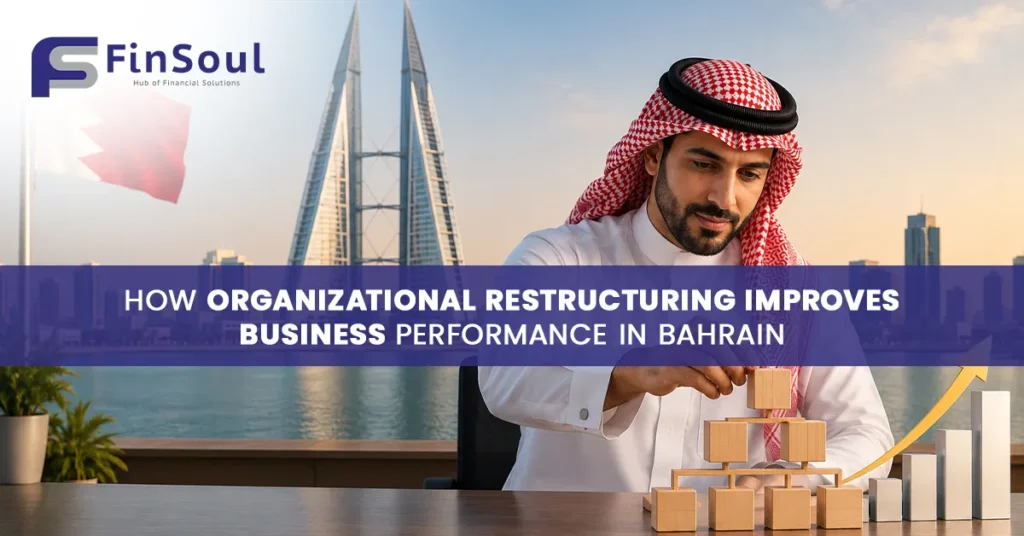
Many companies in the Kingdom reach a point where their existing structure no longer matches their goals, market conditions, or growth ambitions. This is exactly when Organizational Restructuring in Bahrain becomes essential rather than optional. At Finsoul Bahrain, we regularly work with business owners and leadership teams who are ready to move past outdated hierarchies, unclear reporting lines, and inefficient workflows that are quietly holding performance back. In this article, we explore what this process actually involves, why it matters, and how the right approach can transform a struggling or stagnant business into a leaner, more competitive one.
What Is Organizational Restructuring in Bahrain?
Organizational Restructuring in Bahrain refers to the deliberate process of reshaping a company’s internal structure, its departments, reporting lines, roles, and workflows to better align with its strategic goals. This can involve consolidating departments, redefining leadership responsibilities, removing redundant layers of management, or completely redesigning how teams collaborate across the organization.
Unlike a simple reshuffling of job titles, true restructuring is a strategic exercise. It looks at where inefficiencies exist, where decision-making is too slow, and where resources are being spent without a clear return. Done correctly, Organizational Restructuring in Bahrain creates a structure that supports growth instead of quietly working against it.
Why Businesses in Bahrain Need Restructuring
Bahrain’s business environment has changed considerably over the past decade, with increased competition, digital transformation, and shifting labor market expectations. Companies that built their structures years ago often find those same structures no longer serve them. Common triggers include:
- Slow decision-making due to too many management layers
- Departments working in silos with poor communication
- Rising operational costs without matching output
- Leadership teams unclear on ownership of key decisions
- Mergers, acquisitions, or rapid expansion outpacing the existing structure
When any of these signs appear, restructuring becomes a practical response rather than a drastic measure. It allows leadership to reset the organization around current priorities instead of legacy decisions made years earlier.
Business Restructuring Bahrain: Common Approaches
There isn’t a single formula for Business Restructuring Bahrain companies can apply; the right approach depends on company size, industry, and the specific problem being solved. The most common models include:
- Delayering: Removing unnecessary management layers to speed up decisions.
- Divisional realignment: Reorganizing teams around products, regions, or customer segments instead of function.
- Downsizing: Reducing headcount or consolidating roles to control costs.
- Centralization or decentralization: Shifting decision-making authority up or down the hierarchy depending on what the business needs.
- Merger integration restructuring: Combining two organizational structures into one functional entity after an acquisition.
Each of these approaches under Business Restructuring Bahrain initiatives comes with trade-offs, which is why a proper diagnostic phase should always come before choosing a direction.
The Organizational Restructuring Process, Step by Step
A well-run restructuring project typically follows a structured path rather than jumping straight into changes:
- Diagnostic assessment: Reviewing current structure, workflows, and performance data to identify root problems.
- Strategic alignment: Confirming the business goals the new structure needs to support.
- Structure design: Mapping out the new hierarchy, roles, and reporting lines.
- Stakeholder communication: Preparing leadership and staff for upcoming changes.
- Implementation: Rolling out the new structure in phases to reduce disruption.
- Post-restructuring review: Measuring performance against the goals set at the start.
Skipping any of these steps is one of the most common reasons restructuring efforts fail to deliver lasting improvement.
Organizational Restructuring Services and What They Include
Most companies don’t have the internal bandwidth or objectivity to restructure themselves effectively, which is why Organizational restructuring services are typically brought in from outside. These services usually include:
- Organizational diagnostics and structure audits
- Workforce and role analysis
- Change management and internal communication planning
- Legal and labor law compliance review
- Post-implementation performance tracking
Working with a firm that specializes in Organizational restructuring services ensures the process is handled objectively, without the internal politics that often slow down or derail restructuring efforts led purely in-house.
Management Consultancy Bahrain: Why Expert Guidance Matters
Bringing in a Management consultancy Bahrain firm gives leadership access to frameworks and experience that internal teams often lack, especially when restructuring touches sensitive areas like headcount reduction or leadership changes. An external consultant brings an outside perspective that isn’t clouded by internal relationships or years of “how we’ve always done it” thinking.
A capable Management consultancy Bahrain partner also helps manage the human side of restructuring communication, morale, and retention of key talent, which is often where internally-led restructuring projects struggle the most.
How Restructuring Improves Business Performance
When done well, Organizational Restructuring in Bahrain delivers measurable improvements across several areas:
- Faster decision-making: Fewer layers mean quicker approvals and less bureaucracy.
- Lower operational costs: Eliminating redundant roles and overlapping functions reduces overhead.
- Improved accountability: Clear reporting lines mean less confusion over ownership.
- Better resource allocation: Teams are organized around actual business priorities, not historical habit.
- Increased agility: A leaner structure adapts faster to market changes and new opportunities.
These improvements compound over time, which is why businesses that restructure proactively rather than waiting until problems become severe tend to see stronger long-term performance gains.
Measuring Success After Restructuring
A restructuring project shouldn’t end once the new org chart is rolled out. To know whether the changes actually worked, businesses need to track performance against clear benchmarks set before implementation began. Useful metrics include:
- Time taken to reach key decisions before and after the change
- Operating costs as a percentage of revenue
- Employee turnover and retention of critical talent
- Customer satisfaction or service delivery speed
- Productivity per department or team
Reviewing these numbers three to six months after implementation gives leadership a realistic picture of whether the new structure is delivering the intended results or whether further adjustments are needed. Restructuring is rarely a perfect one-time fix; most organizations refine their structure gradually as they learn what works in practice versus what looked good on paper.
Restructuring for Growing vs Established Companies
The reasons behind restructuring often differ depending on where a company sits in its growth journey. Startups and fast-scaling businesses in Bahrain typically restructure to introduce more formal reporting lines and clearer role definitions as headcount grows beyond what informal structures can support. Established companies, on the other hand, often restructure to remove accumulated inefficiencies, flatten overly complex hierarchies, or prepare for a merger, acquisition, or leadership transition.
Recognizing which category your business falls into helps shape the right restructuring approach. A young company usually needs more structure, while a mature one often needs less complexity and faster decision-making pathways.
Legal and Labor Considerations in Bahrain
Any restructuring project involving role changes, redundancies, or department mergers must be handled carefully under Bahrain’s labor regulations. This includes proper notice periods, end-of-service calculations, and documentation for any affected employees. Working with a firm experienced in Organizational Restructuring in Bahrain ensures these legal obligations are met correctly, protecting the business from disputes or compliance issues down the line.
Common Mistakes to Avoid
Businesses attempting restructuring without proper guidance often run into avoidable problems, such as:
- Restructuring without a clear strategic reason behind the changes
- Poor or delayed communication with staff, leading to uncertainty and low morale
- Underestimating the legal steps required for role changes or redundancies
- Failing to measure results after implementation
- Treating restructuring as a one-time event rather than an ongoing capability
Avoiding these missteps is often the difference between a restructuring project that delivers real performance gains and one that simply creates temporary disruption.
Conclusion
Organizational Restructuring in Bahrain is no longer a last-resort measure reserved for companies in crisis; it’s a strategic tool used by growing and established businesses alike to stay competitive, efficient, and aligned with their goals. Whether the challenge is slow decision-making, rising costs, or a structure that no longer fits the business, a well-planned restructuring project can unlock meaningful performance improvements. If your organization is considering this step, Finsoul Bahrain can guide you through every stage, from initial diagnostics to full implementation, ensuring the transition strengthens your business rather than disrupting it.
Frequently Asked Questions
What Is the Main Goal of Organizational Restructuring in Bahrain?
The main goal is to align a company’s structure with its current strategic priorities, improving efficiency, accountability, and decision-making speed across the organization.
How Long Does a Typical Restructuring Project Take?
Timelines vary based on company size and complexity, but most projects take anywhere from a few weeks for smaller teams to several months for large, multi-department organizations.
Is Organizational Restructuring Only for Struggling Companies?
No. Restructuring is also used by growing or high-performing companies to prepare for expansion, mergers, or entry into new markets, not just to address existing challenges.
What’s the Difference Between Restructuring and Downsizing?
Downsizing is one possible outcome of restructuring that focuses on reducing headcount, while restructuring itself is a broader process that may involve realigning roles, teams, or reporting lines without any job losses.
Do I Need a Management Consultancy for Restructuring, or Can It Be Done Internally?
It can be done internally, but most businesses benefit from outside expertise because consultants bring objectivity, structured frameworks, and experience in managing the strategic and operational aspects of the restructuring process.