
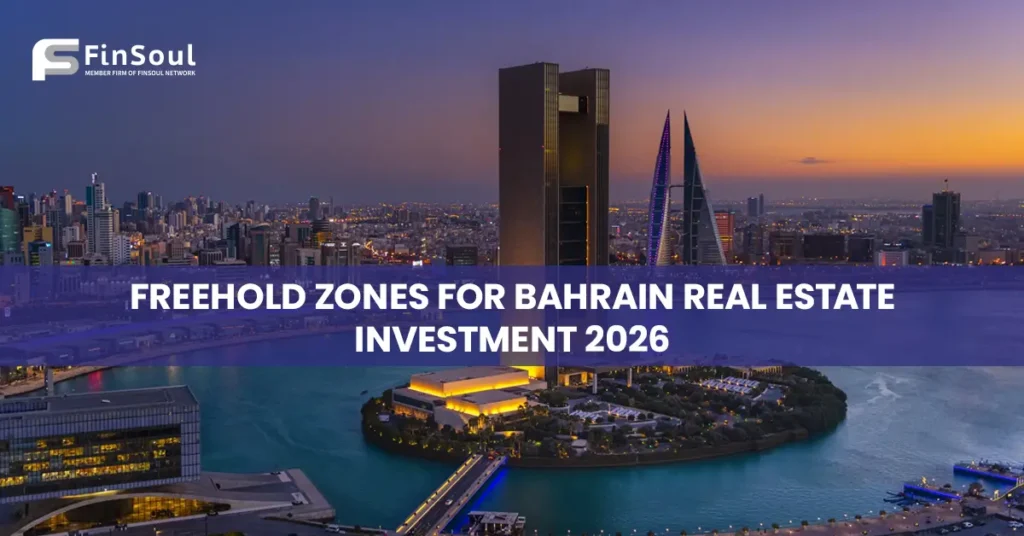
Bahrain has become one of the most attractive markets in the Gulf for buyers who want full ownership rights without a local partner. If you are exploring Bahrain real estate investment in 2026, freehold zones are the starting point, since these are the only areas where foreign nationals can buy land and property outright. Finsoul Bahrain works with international investors every week who want a clear, practical picture of where to buy and how the process actually works, and this guide covers that from start to finish.
What Are Freehold Zones in Bahrain?
Freehold zones are designated areas where non-Bahraini nationals can hold full ownership of residential and commercial property, including the land itself. This is different from leasehold arrangements found elsewhere in the region, where foreign buyers only secure long-term usage rights rather than outright title. For anyone serious about Bahrain real estate investment, understanding this distinction matters, since it directly affects resale value, inheritance rights, and financing options down the line.
Bahrain designated its first freehold areas in the early 2000s, and the government has steadily expanded the list since then to draw capital into tourism, hospitality, and residential development. Today, freehold ownership sits at the center of nearly every serious conversation about Bahrain property investment.
Why the Bahrain Real Estate Market Is Gaining Momentum
The Bahrain real estate market has posted steady price growth over the last three years, driven by a low-tax environment, a currency pegged to the US dollar, and a growing expatriate population. Unlike some neighboring markets, Bahrain does not charge capital gains tax on property sales, which keeps net returns attractive for buy-to-let investors.
Rental yields in popular freehold communities currently sit between 6% and 8% annually, a figure that compares favorably with larger Gulf cities. This yield gap is one of the main reasons interest in Bahrain real estate has picked up pace among GCC and international buyers looking for cash-flow-positive assets rather than pure speculation.
Top Freehold Zones to Know
Several communities stand out for anyone evaluating Bahrain property investment opportunities right now:
- Amwaj Islands: a man-made archipelago known for waterfront villas, marina access, and strong short-term rental demand from tourists
- Durrat Al Bahrain: a large-scale resort community with beachfront apartments and villas, popular with buyers seeking holiday homes
- Diyar Al Muharraq: one of the newest and fastest-growing zones, offering a mix of affordable apartments and larger family villas
- Reef Island: a compact, high-rise community close to Manama’s business district, attractive to professionals renting nearby
- Bahrain Bay: a mixed-use waterfront development combining office space, retail, and premium residential towers
- Riffa Views: a golf-course community geared toward long-term residents rather than short-term rental investors
Each zone carries a different investment profile, so the right choice depends on whether the goal is rental income, capital appreciation, or personal use. Buyers targeting short-term holiday rentals tend to gravitate toward Amwaj Islands and Durrat Al Bahrain, where beach access and marina views keep occupancy high year-round. Those planning to live in the property or rent to long-term tenants often find better value further inland, in newer communities where build quality is high, but pricing has not yet caught up with the more established waterfront addresses.
How Freehold Ownership Works for Foreign Buyers
Foreign buyers purchasing in a freehold zone receive a title deed registered with Bahrain’s Survey and Land Registration Bureau, the same process used for Bahraini nationals. This gives full legal ownership, the right to sell, lease, or pass the property to heirs, and the ability to use the property as collateral for local financing.
Freehold status only applies within the designated zones. Buying property outside these areas as a foreign national typically requires a local partner or a different ownership structure, which is why confirming zone status before signing anything is a non-negotiable step in any Bahrain real estate investment plan.
Step-by-Step: Starting Your Investment
- Define your investment goal: decide whether you want rental income, long-term appreciation, or a personal residence, since this shapes which zone fits best
- Shortlist freehold zones: compare price per square meter, rental demand, and amenities across two or three communities
- Verify the developer and title: confirm the project is registered and the land carries clear freehold status
- Arrange financing: Bahraini banks offer mortgages to foreign buyers, though down payment requirements are usually higher than for locals
- Complete registration: finalize the sale and register the title deed with the Survey and Land Registration Bureau
Buyers who follow this order rarely run into the surprises that derail a Bahrain real estate investment midway through the process.
Benefits of Investing in Bahrain Real Estate
Buyers choosing Bahrain real estate over other Gulf markets typically point to a handful of concrete advantages:
- No annual property tax and no capital gains tax on resale
- A currency pegged to the US dollar, which reduces exchange rate risk for dollar-based investors
- Lower entry prices than larger Gulf cities for comparable waterfront property
- Easy access to Saudi Arabia via the King Fahd Causeway, which supports steady demand from Saudi buyers and renters
- A well-documented registration process for foreign ownership
Risks and Considerations Before You Invest
No market is without risk, and Bahrain is no exception. Supply in some freehold zones has grown faster than demand, which has softened price growth in a handful of communities. Buyers should also budget for service charges, which vary significantly between developments and can affect net rental yield.
Currency risk is minimal thanks to the dollar peg, but liquidity risk is real. Reselling a property in a less established zone can take longer than expected, so anyone planning a short-term Bahrain real estate investment should factor holding periods of at least three to five years into their calculations rather than assuming a quick flip.
Working with an experienced local advisory partner before committing to a purchase helps investors avoid overpaying in oversupplied zones and ensures every legal step is handled correctly, from title verification to registration. A short consultation before you sign anything is often the cheapest insurance you can buy in this market.
Bahrain Real Estate Market Outlook 2026
Analysts expect continued growth through 2026, supported by infrastructure spending, new freehold releases in Diyar Al Muharraq, and steady interest from Saudi and other GCC buyers. Tourism-linked demand in Amwaj Islands and Durrat Al Bahrain is also expected to hold rental yields steady, even as new supply comes online.
For investors who move early into well-located freehold zones, patience tends to be rewarded over speculation, with steady income and manageable long-term appreciation both realistically within reach. Government-backed infrastructure projects around Bahrain International Airport and the northern causeway corridor are also expected to lift property values in nearby freehold communities over the next few years, adding a further layer of upside to a well-timed Bahrain real estate investment.
Conclusion
Freehold zones remain the clearest, most secure route into Bahrain real estate investment for foreign buyers, offering full ownership, no capital gains tax, and rental yields that hold up well against the rest of the Gulf. Whether the goal is a holiday home in Durrat Al Bahrain or a rental portfolio in Diyar Al Muharraq, getting the zone and the paperwork right from day one makes all the difference. Finsoul Bahrain can walk you through zone selection, title verification, and financing so your next purchase is built on solid ground.
Invest in Bahrain Real Estate with Confidence
Finsoul Bahrain helps local and international investors navigate Bahrain’s real estate market with expert guidance. From identifying the right freehold zones and verifying property ownership to investment advisory and transaction support, our team makes the buying process simple and secure. Whether you’re purchasing your first investment property or expanding your real estate portfolio, we’re here to help you make informed decisions every step of the way.
Location
Office 41, Building 2737, Road 3649, Seef, Al Manama 436, Bahrain
Email
info@fin-soul.com
Phone
+973 3383 2422
Frequently Asked Questions
Can foreigners buy freehold property in Bahrain?
Yes, foreign nationals can hold full ownership of land and property within designated freehold zones such as Amwaj Islands and Durrat Al Bahrain.
Is there a minimum investment amount for property in Bahrain?
There is no fixed legal minimum, though most freehold apartments start from around BHD 40,000 to 60,000 depending on the zone.
Do foreign owners pay property tax in Bahrain?
No, Bahrain does not levy an annual property tax or a capital gains tax on the sale of residential property.
Which freehold zone offers the best rental yield?
Amwaj Islands and Diyar Al Muharraq currently offer some of the strongest rental yields, largely due to tourism demand and newer, more affordable stock.
Can I get a mortgage as a foreign investor in Bahrain?
Yes, several Bahraini banks offer mortgages to foreign buyers purchasing in approved freehold zones, though down payment requirements are typically higher than for locals.